Expanded Liquid Testing With Genomic and Epigenomic Insights
Guardant360 Liquid is the first and only liquid biopsy to deliver genomic and epigenomic insights for a more complete view of cancer.1 By analyzing cell-free DNA, Guardant360 Liquid helps healthcare providers detect actionable genomic and epigenomic alterations to guide personalized treatment and monitor tumor evolution.
A Fast CGP Panel with Guideline-Recommended Actionable Biomarkers
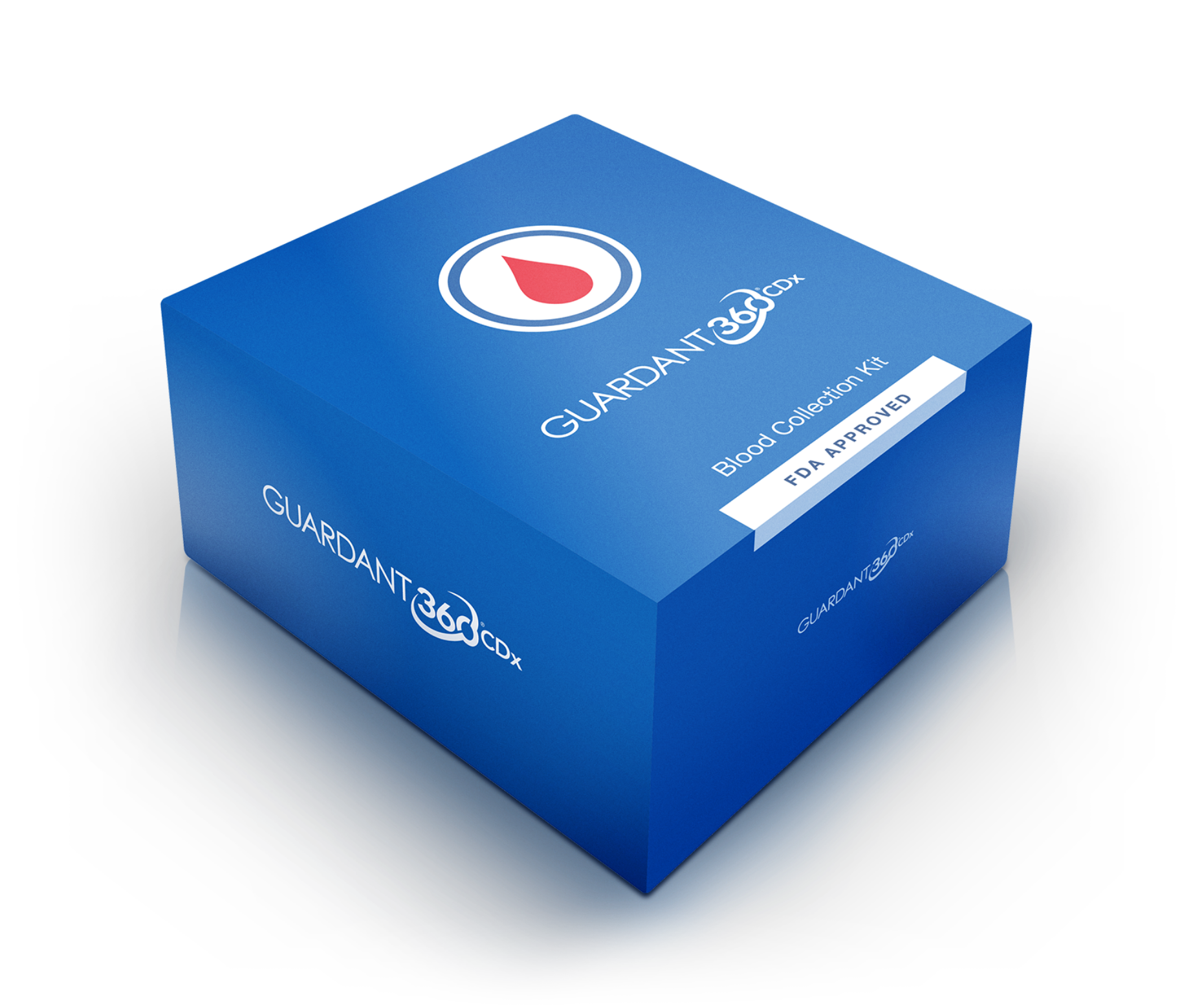
Our Guardant360 CDx test is our FDA-approved liquid biopsy that provides results in 7 days upon sample receipt in the laboratory to inform treatment decisions.2
Unlock Maximum Insights From Minimal Tissue With Advanced Multiomics
Guardant360 Tissue is a multiomic test for patients with advanced solid tumors, providing comprehensive genomic, transcriptomic, and epigenomic insights3 using minimal tissue—requiring 92% less surface area4 and 40% fewer slides than the industry standard.5
Minimal Residual Disease Detection and Therapy Response Monitoring
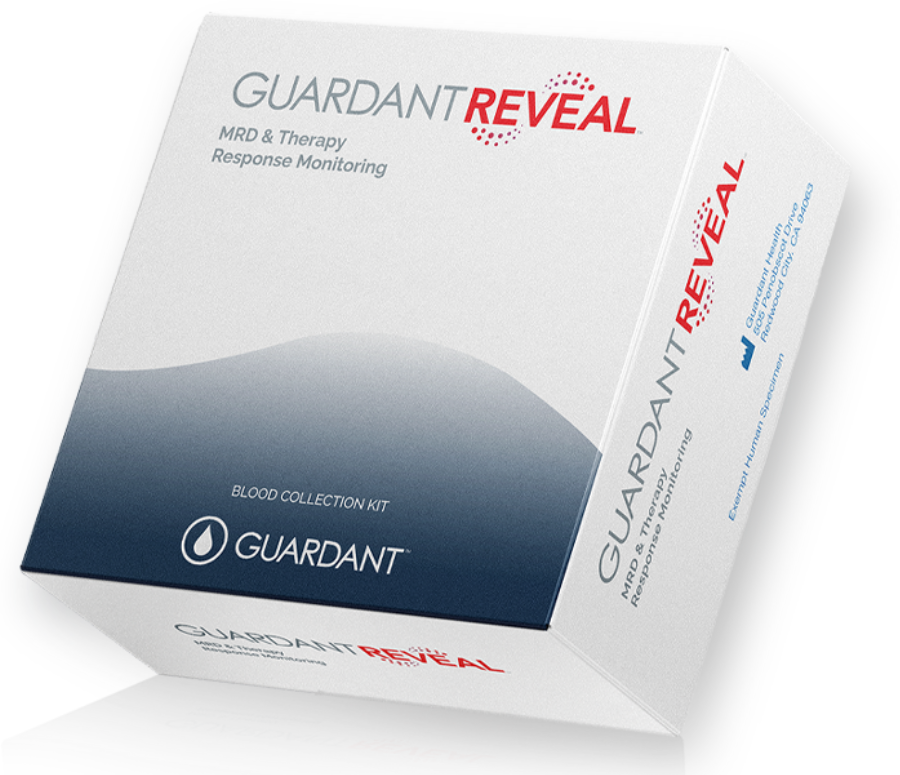
Guardant Reveal is a simple blood test that utilizes circulating tumor DNA (ctDNA) to detect cancer at the molecular level, offering a more precise, ctDNA-guided approach to cancer monitoring. Guardant Reveal is available for molecular residual disease (MRD) detection and recurrence monitoring in early-stage colorectal, breast, and lung cancers and for therapy response monitoring in advanced cancer.

The Only Tissue-Free Biopsy to Measure Treatment Response
Our Guardant360 Response test is the first tissue-free biopsy that enables doctors to view molecular response, or changes in ctDNA levels, to get an early indication of patient response to immunotherapy or targeted therapy for advanced stage solid tumors. Studies show the Guardant360 Response test can predict treatment response 8 weeks earlier than current standard-of-care imaging.6-15
The first and only commercially available liquid biopsy to deliver genomic and epigenomic insights from a single input.
Fastest average turnaround time from sample receipt to results based on stated average turnaround times from Integra Connect data.
Guardant360 Tissue Assay Specifications 2025. Guardant Health, Inc. Redwood City, CA.
2mm2 for Guardant360 Tissue vs 25mm2 industry standard.
6 slides for Guardant360 Tissue vs 10-slide industry standard for NGS testing only.
Raja R, Kuziora M, Philip Z. Brohawn PZ, et al. Early Reduction in ctDNA Predicts Survival in Patients with Lung and Bladder Cancer Treated with Durvalumab. Clin Cancer Res; 2018: 24(24): 6212-6222. DOI: 10.1158/1078-0432.CCR-18-0386.
Aggarwal C,Thompson JC, Chien A, et al. Dynamic monitoring of circulating tumor DNA next-generation gene sequencing as a predictive biomarker of response and progression-free survival after pembrolizumab monotherapy in patients with advanced NSCLC.J Clin Oncol; 2019: 37:15 suppl, 3040-3040. DOI:10.1200/JCO.2019.37.15.
Kim ST, Cristescu R, Bass AJ, et al. Comprehensive molecular characterization of clinical responses to PD-1 inhibition in metastatic gastric cancer. Nat Med; 2018: 24(9):1449-1458. DOI: 10.1038/s41591-018-0101-z.
Shaw AT, Martini JF, Besse B, et al. Early circulating tumor (ct)DNA dynamics and efficacy of lorlatinib in patients (pts) with advanced ALK-positive non-small cell lung cancer (NSCLC). J Clin Oncol; 2019: 37:15_suppl, 9019-9019. DOI: 10.1200/JCO.2019.37.15.
Pascual J, Cutts RJ, Kingston B, et al. Assessment of early ctDNA dynamics to predict efficacy of targeted therapies in metastatic breast cancer: Results from plasmaMATCH trial [abstract]. In: Proceedings of the 2020 San Antonio Breast Cancer Virtual Symposium; 2020 Dec 8-11; San Antonio, TX. Philadelphia (PA): AACR; Cancer Res 2021;81(4 Suppl):Abstract nr PS5-02.DOI: 10.1158/1538-7445.SABCS20-PS5-02.
Mack PC, Redman MW, Moon J, et al. Residual circulating tumor DNA (ctDNA) after two months of therapy to predict progression-free and overall survival in patients treated on S1403 with afatinib +/- cetuximab.J Clin Oncol; 2020: 38:15_suppl, 9532-9532. DOI: 10.1200/JCO.2020.38.15.
Maron SB, Chatila WK, Millang BM, et al, Pembrolizumab with trastuzumab and chemotherapy (PTC) in HER2-positive metastatic esophagogastric cancer (mEG): Plasma and tumor-based biomarker analysis. J Clin Oncol; 2020: 38:15_suppl, 4559-4559. DOI: 10.1200/JCO.2020.38.15.
Modi S, Park H, Murthy RK, et al. Antitumor Activity and Safety of Trastuzumab Deruxtecan in Patients With HER2-Low-Expressing Advanced Breast Cancer: Results From a Phase Ib Study. J Clin Oncol; 2020: 38(17):1887-1896. DOI: 10.1200/JCO.19.02318.
Zhang Q, Luo J, Wu S, et al. Prognostic and Predictive Impact of Circulating Tumor DNA in Patients with Advanced Cancers Treated with Immune Checkpoint Blockade. Cancer Discov; 2020: 10:12, 1842-1853. DOI: 10.1158/2159-8290.CD-20-0047.
Thompson JC, Carpenter EL, Silva BA, et al. Serial Monitoring of Circulating Tumor DNA by Next-Generation Gene Sequencing as a Biomarker of Response and Survival in Patients With Advanced NSCLC Receiving Pembrolizumab-Based Therapy. JCO Precis; 2021: 5, 510-524. DOI: 10.1200/PO.20.0032.